
GPS Medical Billing
Confused about GPS medical billing? This simple guide explains the rules for 0, 10, and 90-day periods, what’s covered, modifiers to use, and tips to avoid denials so you get paid right.
Hey, have you ever helped a doctor or worked in billing and seen a claim come back denied because of something called the “global period”? It happens a lot, and it can be super frustrating. Think of it like buying a full meal deal at a restaurant – the main dish comes with sides and a drink, all for one price. You don’t pay extra for the fries if they’re part of the bundle. That’s kind of what the global period in medical billing does for surgery.
Medicare set this up years ago to keep things fair. One payment covers the surgery and the usual care around it. No surprise extra bills for normal check-ups after. Today, I’ll explain it like we’re chatting over coffee, so it’s easy to follow.
Here are the big things you’ll learn today:
- The global period bundles care to make payment simple and fair.
- It lasts 0, 10, or 90 days based on how big the surgery is.
- Special codes called modifiers help when things are different.
- Getting it wrong causes many denials, but you can fix that easily.
- Track it well, and your office makes more money without stress.
What Does Global Period Mean?
The global period, sometimes called the global surgical package, is a set time when all normal care for a surgery is paid in one lump sum. Medicare started this to stop doctors from billing tiny bits over and over.
It helps patients too – no shock bills for routine stuff after an operation. For example, if a surgeon fixes a broken bone, the payment includes the fix and the follow-up visits to check healing.
This rule applies mostly to Medicare, but many insurance companies follow it too.

What’s Inside the Global Package?
The package covers everything usual from start to finish. Here’s what’s normally included:
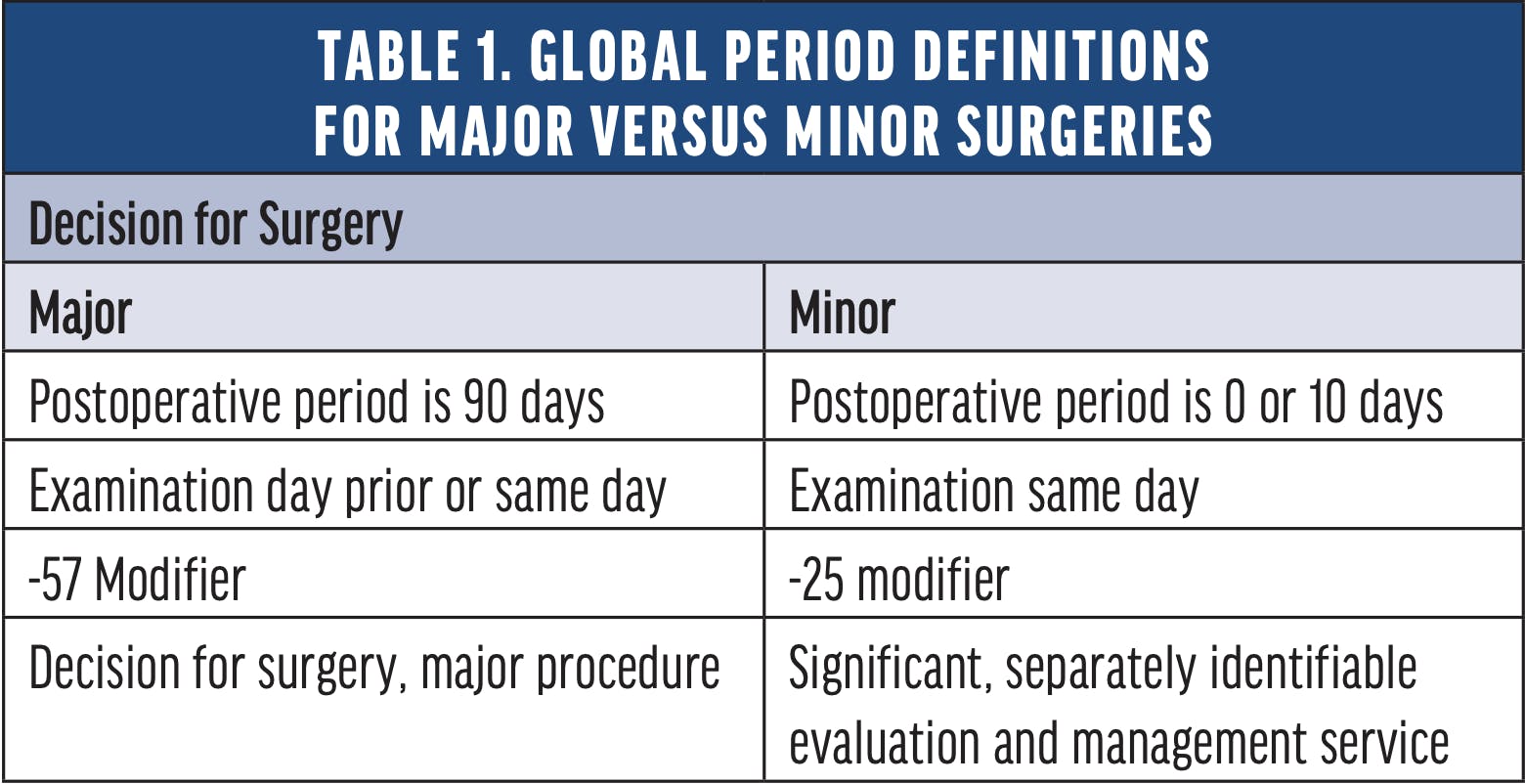
- Visits the day before or on surgery day (for big ones, one day before).
- The surgery itself.
- Care right after, like pain help or stitch removal.
- All normal follow-up visits in the set time.
- Fixing small issues from the surgery, like a bit of infection.
It’s like the doctor promises to take care of the usual stuff without extra charges.
What’s Not in the Global Package?
Some things you can bill extra for. These are outside the bundle:
- The first visit where the doctor decides surgery is needed (for major ones).
- Care for problems not linked to the surgery, like a new cold.
- A different surgery during the time if it’s unrelated.
- Big complications that need a return to the operating room sometimes.
Knowing this helps you bill right and get paid for extra work.
Different Global Period Lengths
Not all surgeries are the same, so periods vary:
- 0-day global: For small things like a quick injection or biopsy. Care ends the same day.
- 10-day global: For minor surgeries, like removing a small lump. Covers up to 10 days after.
- 90-day global: For big operations, like knee replacement. It’s really 92 days total – one day before, surgery day, and 90 days after.
You can check any code’s days on the Medicare fee schedule tool online. It’s free and quick.
Key Modifiers for Global Billing
Modifiers are little tags you add to codes to explain special cases. They tell insurance, “Hey, this is different!”
- -54: Surgeon did only the operation, someone else handles aftercare.
- -78: Unplanned trip back to the operating room for a surgery-related issue.
- -79: A new, unrelated surgery during the global time.
For example, imagine a patient has knee surgery. Two weeks later, they hurt their shoulder in a fall. That shoulder fix gets -79 so it’s paid separate.
In 2025, rules got stricter for 90-day cases. Now you often need -54 even for informal hand-offs of care.

Common Challenges and How to Fix Them
Global period mix-ups cause 10-20% of surgery claim denials in many offices. That means lost money and extra paperwork.
Big problems include forgetting modifiers or billing normal check-ups separate. Transferring care between doctors can confuse things too.
Fixes are simple:
- Use a global period tracker tool or software.
- Write clear notes in patient charts.
- Train your team every year.
- Check claims twice before sending.
Many denials happen because post-op visits are fewer than expected, but billing wrong still hurts.
Real-Life Examples of Global Periods
Let’s say Sarah has knee replacement – that’s 90-day global. Her surgeon gets paid once for the operation and all check-ups for three months. If Sarah sees her family doctor for the flu during that time, that visit bills normal.
Now, Tom gets a skin biopsy – 0-day global. Any visit the next day for something else can be billed right away.
Compare doing it yourself versus hiring a billing company. In-house works for small offices, but experts catch more errors and know 2025 changes, like new code G0559 for shared post-op care.
Best Tips for Smooth Global Billing
Ready to make it easier? Try these:
- Mark surgery dates big on your calendar or software.
- Look up every code’s global days – don’t guess.
- Add alerts for modifiers in your system.
- Stay current – 2025 brought new rules for transfers and telehealth visits.
- Review denied claims fast and learn from them.
Tools like AI trackers are trending now. They spot issues before you send the claim.
Getting global period right cuts stress and boosts your paycheck. Start small – check one code today or talk to your billing team about training. You’ll see fewer denials and happier days soon. What part confuses you most? Try these tips and watch things get better!
Frequently Asked Questions (FAQs) GPS Medical Billing
What is global period in medical billing?
The global period is a set time after surgery when one payment covers the operation and all normal follow-up care. It stops extra bills for routine things and keeps payment fair for doctors and patients. Medicare rules say it can be 0, 10, or 90 days long.
How long is a 90-day global period?
It’s actually 92 days in total. That includes one day before the surgery (for big ones), the day of the operation, and then 90 full days after. This covers most major surgeries like hip or heart work.
Can you bill E/M visits during global period?
Yes, but only if the visit is for something completely unrelated to the surgery, like a new rash or check-up for diabetes. Add modifier -24 to the code so insurance knows it’s separate and pays for it.
What modifier for unrelated surgery in global?
Use modifier -79. It tells the payer a new procedure by the same doctor during the global time has nothing to do with the first surgery. This way, you get paid full for the second one.
What procedures have 0-day global?
Small, quick ones like injections, simple biopsies, or endoscopies. Care ends the same day, so any visit after can usually be billed normal unless it’s directly related to that minor procedure.
Why do claims get denied in global period?
Most often because someone bills for normal post-op care separately or forgets a modifier for exceptions. Missing documentation or wrong transfer of care rules (especially new 2025 ones) also cause trouble and slow down payment.